

- Goal: identify safe cells and account for every mine without opening a mine.
- Evidence: a revealed number counts adjacent mines, not distant hazards.
- Decision: reveal only when the local clue supports the move, or pause for a better angle.
- Mindset: Minesweeper is a measured cards puzzle, so a slower turn can be a stronger turn.
Minesweeper | Minesweeper Strategy Guide
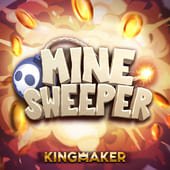 Minesweeper
Minesweeper is a quick cards experience built around careful reveals, number clues, and measured decisions. This page explains the round in plain language so a new visitor can understand the board before choosing to explore it.
A Minesweeper Demo is useful for learning the rhythm without rushing: inspect the layout, compare clues, and decide when a safe-looking move is actually uncertain. The ah88 ph Minesweeper presentation keeps the focus on a clean mobile board and an easy-to-follow entry point.
In short, Minesweeper rewards information before action. Reveal a known-safe space, use adjacent numbers to map risk, mark likely mines, and stop when the remaining choice is no longer supported by evidence. The guide below gives the complete sequence and practical habits.
Cards Around Minesweeper: Quick Comparisons
These nearby cards choices make it easier to compare pace and decision style. The related set uses the same recorded game names and images used across the site; only the linked detail route is used where one exists.
What Minesweeper Means for a Careful Cards Session
Minesweeper is a clue-led board game rather than a speed contest. Covered cells hide either open space or a mine, while revealed numbers describe how many mines touch the surrounding cells. That small rule creates a compact logic puzzle: every number is evidence, every flag is a working hypothesis, and every reveal changes the next question.
For someone arriving from a casino lobby, the ah88 ph Minesweeper format is easiest to understand as a short cards session with a visible risk map. The aim is not to guess every hidden cell immediately. The aim is to build a chain of confirmed facts, use those facts to isolate danger, and finish only when the board is solved or the player chooses to leave.
A Minesweeper Demo can show the same decision language in a low-pressure setting. Start by reading the whole visible arrangement. Then inspect a number and count its covered neighbours. If the number equals the number of still-unmarked neighbours, those neighbours are candidates for flags. If the number already has enough flags around it, the other covered neighbours can be treated as safe candidates. This is the central Minesweeper loop.
The card category matters because the session is concise and visual. Minesweeper does not ask for a long rules list, complicated controls, or a crowded interface. It asks for patience, consistent notation, and a willingness to leave an uncertain branch alone until another clue resolves it. Those habits also make the Minesweeper Demo easier to revisit and make the ah88 ph Minesweeper experience less intimidating on a phone.
How a Minesweeper Round Progresses from Start to Finish
The reliable Minesweeper order is preview, reveal, read, mark, verify, and finish. Following that order prevents a player from treating a hunch as a confirmed clue and gives every Minesweeper Demo attempt a repeatable structure.
- Preview the board. Before tapping, scan the visible dimensions and note open areas. A wide empty region may reveal more numbers at once, while a crowded edge may offer fewer alternatives. This first look lets an ah88 ph Minesweeper visitor plan a calm opening.
- Make an opening reveal. Select a covered cell and observe the result. If a blank area expands, let the board finish showing its connected information before making another choice. If a number appears, pause and treat it as the first local instruction.
- Read one clue at a time. Count the covered neighbours around the number. Separate cells already marked from cells still unknown. Minesweeper becomes clearer when the count is written mentally as “mines still needed” rather than as a vague feeling of danger.
- Mark a supported hazard. When the clue count and the remaining covered neighbours match, mark the likely mine. A flag is a note for the next calculation, not a promise that the whole board is solved. A Minesweeper Demo is an ideal place to practise this distinction.
- Open confirmed safe cells. If a clue has received all the flags it requires, its other covered neighbours are safe candidates. Reveal those cells and let any new numbers join the map. Avoid skipping ahead to an unrelated area just because it looks attractive.
- Cross-check linked clues. Two numbers may share some covered cells but have different totals. Subtract the shared information: if one clue needs one mine in a pair and the other clue needs no additional mine in that pair, the difference identifies a safe or dangerous cell. This is advanced Minesweeper reasoning without complicated mathematics.
- Resolve the final boundary. Near the end, compare every remaining unknown with all of its adjacent numbers. If more than one pattern remains possible, do not invent certainty. A responsible ah88 ph Minesweeper session can stop or choose a clearly labelled risk instead of chasing a forced outcome.
- Review the result. A solved board confirms the map; an opened mine shows where an assumption became too strong. Review the clue that was misread and carry that lesson to the next Minesweeper round. A Minesweeper Demo can make this review feel educational rather than frustrating.
The same order works whether the board is familiar or new. A player who repeats the sequence will notice that Minesweeper is less about tapping quickly and more about preserving useful information. That is why the ah88 ph Minesweeper layout benefits from short, focused sessions.
Minesweeper Features That Change the Decision Pace
The most useful Minesweeper features are the ones that make evidence easier to read, not the ones that encourage hurried taps. A good Minesweeper Demo should make the board legible, keep controls predictable, and show enough status information for a player to know what remains.
Readable clues
Clear numbers and strong contrast help an ah88 ph Minesweeper player count neighbours on a small screen. The clue should be visible at a glance, with no need to zoom or remember a hidden legend.
Flag notes
A flag lets a Minesweeper player record a likely hazard and return to the calculation. Treating a flag as a note keeps the reasoning flexible when a later clue changes the picture.
Board feedback
Useful feedback distinguishes a safe reveal, a new clue, and a finished board. In a Minesweeper Demo, that steady feedback teaches timing better than a decorative effect.
Mobile reach
The ah88 ph Minesweeper view is suited to a short phone session: controls stay close to the board, while the player can pause between calculations rather than maintain a long chain of actions.
For comparison, a player who enjoys planning may also appreciate the deliberate choices in Mega Ace. It is a useful contrast: Minesweeper makes clues explicit, while another game may place more emphasis on rhythm and feature timing. The comparison is about pace, not a promise of a result.
A second helpful feature is a visible session boundary. Decide how long to study the board before opening it, keep a comfortable stake or practice setting, and stop when attention drops. Minesweeper rewards a fresh eye, and no Minesweeper Demo is improved by exhausted guessing.
Practical Minesweeper Habits for Better Clue Reading
The strongest Minesweeper habit is to label certainty honestly. A confirmed safe cell, a confirmed mine, and an unresolved possibility should never feel like the same thing. The ah88 ph Minesweeper audience can improve quickly by using a simple three-level mental note: safe, flagged, and unknown.
- Begin with information-rich areas. If several cells are available, prefer a move that will expose multiple neighbours. This does not remove every risk, but it increases the amount of evidence the next Minesweeper choice can use.
- Use edges carefully. Edge clues have fewer neighbours, which can simplify a calculation, but they can also leave fewer alternatives when a guess is necessary. A Minesweeper Demo makes the edge-versus-centre difference easy to see.
- Recount after every reveal. A new blank or number may change how many covered cells belong to an older clue. Recounting is a small pause that protects the whole ah88 ph Minesweeper map from an outdated assumption.
- Do not over-flag. Flags are valuable only when they represent a clue-supported possibility. Too many decorative flags can make a Minesweeper board look certain while hiding the actual unknowns.
- Compare pairs. If one number touches a set of cells that another number also touches, compare the totals. The difference can expose which cell is extra. This is a portable Minesweeper method that works across many board shapes.
- Manage the close. A short final review is better than a dramatic last tap. Check the remaining count, inspect each boundary, and end the Minesweeper Demo when the evidence is complete or attention is no longer reliable.
For a different visual tempo, Golden Genie can sit beside a Minesweeper session as a separate entertainment choice. The important principle is separation: do not carry an untested Minesweeper assumption into another game, and do not treat a different game’s pace as proof that a clue is safe.
The ah88 ph Minesweeper approach is therefore simple: gather facts, make one supported move, and re-evaluate. A Minesweeper Demo can teach that sequence in minutes, but confidence comes from repeating it without turning every uncertain cell into a guess.
Minesweeper Questions New Players Ask First
These answers keep the Minesweeper rules practical. They are also a quick reference for anyone comparing the cards category with the broader ah88 ph experience.
Is Minesweeper based on luck or logic?
Minesweeper is primarily a logic exercise because revealed numbers provide information about adjacent mines. Some board positions can eventually require a probability choice, so a careful player should recognise uncertainty instead of calling every move guaranteed.
What is a Minesweeper Demo?
A Minesweeper Demo is a convenient way to learn the board language: covered cells, number clues, flags, and safe reveals. Use it to practise counting and to understand the round flow before considering any promoted access.
How should I use a number clue?
Count the surrounding covered cells and subtract any hazards you have already marked. If the remaining number equals the remaining covered cells, those cells are likely mines. If the number has been satisfied, the unmarked neighbours are safe candidates. Recheck after each reveal.
Is the ah88 ph Minesweeper layout suitable for a phone?
The ah88 ph Minesweeper page is presented as a compact, touch-friendly entry point. Keep the device upright, tap deliberately, and pause to read the full clue area rather than relying on rapid gestures.
Should I flag every suspicious cell?
No. A flag should record a clue-supported possibility. If the evidence is incomplete, leave the cell unknown and use another nearby number to improve the calculation. This makes a Minesweeper Demo more useful for learning.
What should I do after a mistake?
Review the last clue, identify whether you miscounted or assumed a flag too early, then start a fresh round. Minesweeper skill grows through short reviews, not by chasing a single result.
Can I compare this with other games?
Yes, but keep each game’s rules separate. Heat Bingo offers a different kind of number-driven entertainment, while Minesweeper asks you to interpret local evidence. Neither game can predict the other.
When is it sensible to stop?
Stop when the board is solved, when the available choice is unsupported, or when you no longer feel focused. A responsible ah88 ph Minesweeper session values clear decisions and comfortable limits over an unnecessary final tap.
Minesweeper in Five Simple Takeaways
Minesweeper is easiest to enjoy when the process stays visible. Use these five points as a compact recap before opening a board or returning to a Minesweeper Demo.
1. Observe.
Scan the board and locate the first useful clue.
Scan the board and locate the first useful clue.
2. Count.
Read each number against its adjacent covered cells.
Read each number against its adjacent covered cells.
3. Mark.
Flag a mine only when the evidence supports it.
Flag a mine only when the evidence supports it.
4. Reveal.
Open confirmed-safe cells and update the map.
Open confirmed-safe cells and update the map.
5. Stop.
Finish confidently or pause when the choice becomes a guess.
Finish confidently or pause when the choice becomes a guess.
That sequence turns the ah88 ph Minesweeper experience into a readable set of small decisions. A Minesweeper Demo is a helpful starting point, while the full Minesweeper board gives the same clue-reading ideas more room to develop. Keep the session responsible, use only the controls you understand, and let evidence—not excitement—set the pace.
If you are ready to look at the board, the current game icon and the access buttons above provide the direct route. Return to this guide whenever the Minesweeper pattern feels unclear, especially before changing your approach or trying a new board.